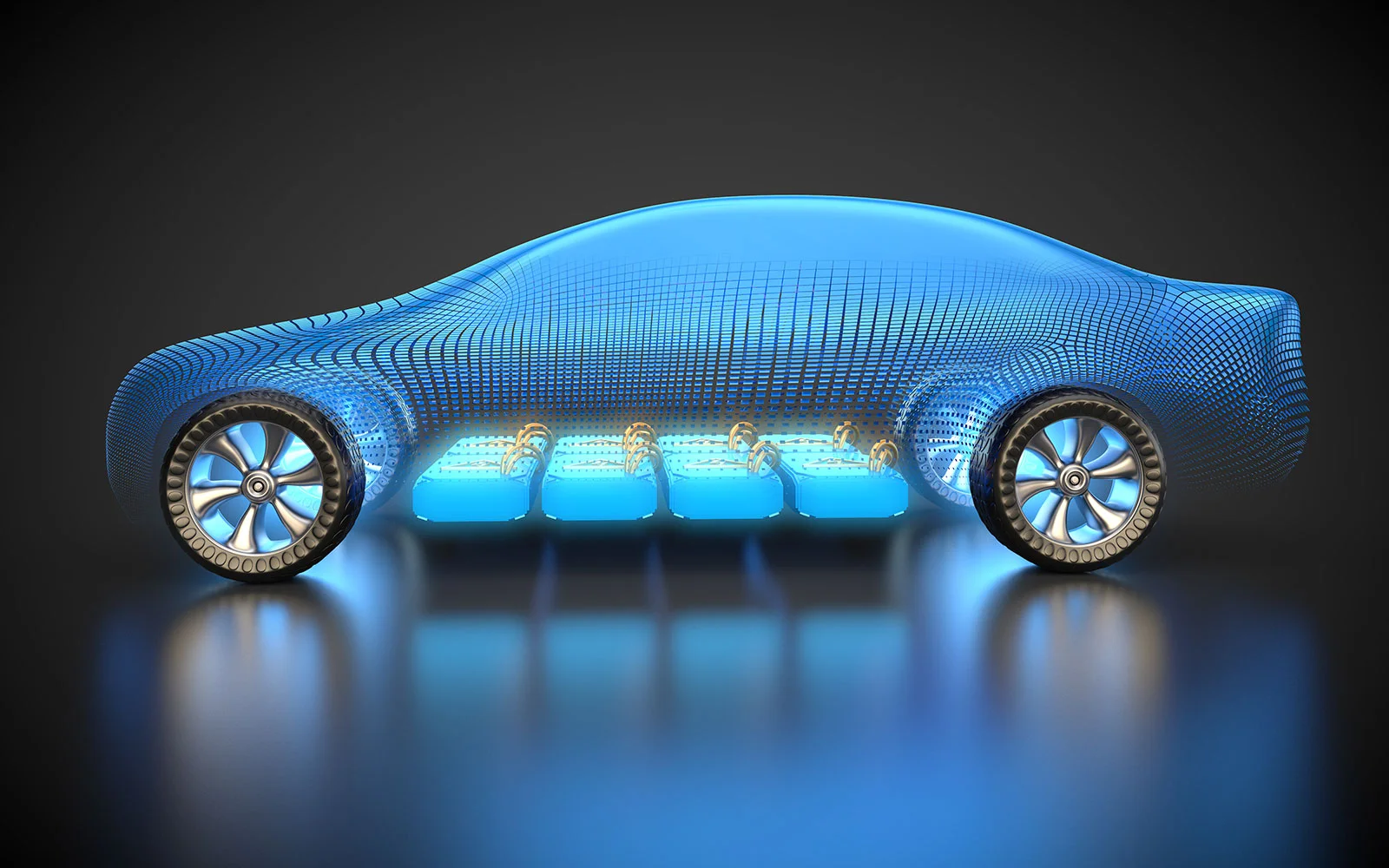
Auto Battery Chargers
There was a day when you would connect the auto battery charger cables to your car battery, press the button and wait. You would occasionally check the dial to make sure that your battery was not being overcharged, and make sure that you switched it off at exactly the right time.
These days are over, and there are much more efficient charging techniques available today. Practically all cars use 12 volt batteries, as do power sports and marine batteries, and if you use a proper modern battery charger you will extend the life of your battery and ultimately save yourself money. Your warranty on your gel cell, AGM or lead acid battery might be negated if you do not use the recommended charger and something goes wrong. You can ruin your battery by using the wrong charger.
So what are your options, and how do you know if you are using the best charger for your type of battery. You must first determine what type of battery you have, and be aware of the storage capacity of the battery you are using. However, since auto batteries are normally used only for starting a car and being recharged while moving, and also to provide the small current needed for lighting and sound systems while the car is not running, the storage capacity might seem irrelevant.
A normal auto battery will store 50 amp hours and a marine battery, for example, 100 amp hours. Both might deliver 12 volts of electrical power, but each will take a different time to fully charge from dead – around 6 and 11 hours respectively with a 10 amp charger. You must make sure when buying your charger that it has enough charging power to meet your needs. The greater the power the less time it will take to charge the battery to a usable state.
Let’s now look at these different types of auto battery in more detail.
Flooded Battery
The flooded battery is the most common, and the type that most car drivers are familiar with. The battery contains a liquid sulphuric acid electrolyte and the individual cells can be accessed and filled with distilled water to make up for water lost when hydrogen and oxygen are generated from the water. They are generally used to start car engines, and have an absorption voltage of 14.2 to 14.5 volts (the voltage at which charging continues after the initial bulk charge) and a float voltage of between 13.2 and 13.5 volts (the voltage at which a maintenance charge is applied).
Sealed Battery
These are of the same design as the flooded batteries, but the cells are sealed so that water cannot evaporate, and there is no need to refill them. They have the same absorption and float voltages as the flooded batteries.
Valve Regulated Lead Acid
The VRLA batteries are the same as the sealed batteries, but have valves that allow the safe exit of hydrogen and oxygen gases generated while charging, although this is not as common as with the standard flooded battery. Instead, the hydrogen and oxygen recombine within the battery through the action of a catalyst so that there is no loss of water.
Absorbed Glass Matt
The AGM battery consists of boron silicate glass mats saturated with electrolyte between the plates. They can fall over without losing electrolyte, and do not generate hydrogen when charging. This is again a recombinant type of battery, where the hydrogen and oxygen recombine within the battery and form water again. The charging voltages are the same as for the other lead-acid batteries, but they lose less charge while not in use – only bout 1% - 3% monthly. However they cost 2 to 3 times the price of the traditional flooding style of battery.
Gel Batteries
Silica is used to form a gel of electrolyte in these batteries, and so again the electrolyte cannot be spilled. However they must be charged at a lower rate than the other types of battery, and also at a lower voltage than that of flooded or AGM batteries. They therefore take longer to charge. They are not commonly used in cars, and are of most use in solar electrical systems.
These are the basic types of car battery, although gel batteries are not generally used in automobiles these days. The chargers needed for these batteries do not necessarily differentiate between battery types, and normally charge in three stages.
The first stage is the Bulk Charge, where current is sent at a maximum safe rate until the battery has been nearly fully charged (about 80% - 90% of maximum). The charger then switches to the Absorption Charge, where the voltage is constant and the current reduces gradually according to the resistance of the battery as it become charged. Although the current drops, the charger produces maximum voltage during absorption charging, at around 14.2 – 15.5 volts.
The third and final stage in the charging process is called the Float Charge, where the charging voltage is reduced to around 12.8 to 13.2 volts, often called the trickle charge. At this voltage the emission of hydrogen gas is maintained at a minimum for safety reasons. The purpose of this stage is to maintain the battery at full charge until it is needed for use. Some chargers use pulse width modulation (PWM) to achieve this, whereby when very small voltage losses are detected in the battery, the charger will send very short pulses of charge to keep it topped up.
It should be noted at this point that the majority of consumer battery chargers use Stage 1 only: bulk charging. They are therefore unsuitable to be left on for long periods, and are for top-up charging only. If you want a charger that provides a trickle charge you should look for a regulated charger. Some are called taper chargers that simply provide current at a decreasing rate as the battery charges. However, there is no specific voltage at which the charger will fully charge the battery without overcharging it and a taper charger can either over or undercharge your battery. You can overcome this problem after a fashion by using a timer charger, and although they can work better, the timing has to be set correctly for the battery, and can’t just be left on and forgotten about.
Two-stage chargers charge until the battery reaches a preset voltage after which a reduced float voltage is used. You have to make sure that the preset voltage is higher than the absorption voltage or it will be undercharged. You could also overcharge your battery, so you should keep an eye on it, unless you have a processor controlled auto battery charger to provide the best charging options based upon the voltage and resistance changes of your battery as it charges
These are the most common battery and auto battery chargers available today, and nobody can argue that they are not a bit more advanced than your fathers used to have to use. As for the future and what our sons and daughters will be using – who knows!
Additional automotive maintenance info:
Automotive Information BlogUpdated : Fri, 03 Jul 2009 18:15:41 GMT
Car Buying | Get More Car for Less Money | Auto-Facts.org
New car buying the whole story. Dealership insiders report on common car dealer rip-offs and scams. Gain comfort in knowing your buying at a fair price.
Publ.Date : Mon, 20 Apr 2009 22:11:29 GMT
Automotive Repairs | Car Maintenance | Auto Facts.org
Automotive repairs and oil changes on a regular basis is unavoidable. Having your wallet drained by desperate auto repair shops is avoidable. Learn how
Publ.Date : Mon, 06 Apr 2009 21:29:53 GMT
Online Auto Repair Manual | Diy Car Repairs | Auto-facts.org
Online auto repair manual for diy car repairs and for protection against auto repair rip-offs. Instantly verify automotive repair part and labor pricing.
Publ.Date : Sun, 26 Apr 2009 16:40:22 GMT
Free Check Engine Light Scams | Auto-Facts.org
Free check engine light diagnostic services exposed. Master automobile mechanic explains the best way to handle Diy check engine light repair and reset.
Publ.Date : Thu, 16 Apr 2009 22:02:22 GMT
Playstation 3 Car Racing Games | Auto-Facts.org
Playstation 3 car racing games reviewed by 3 generations of users. See the most popular online racing car games and ps3 racing accessories of all time.
Publ.Date : Sat, 11 Apr 2009 19:14:53 GMT
Website Traffic Promotion
Copyright © 2009
http://www.autobatterychargersonline.com
Learn more about our site